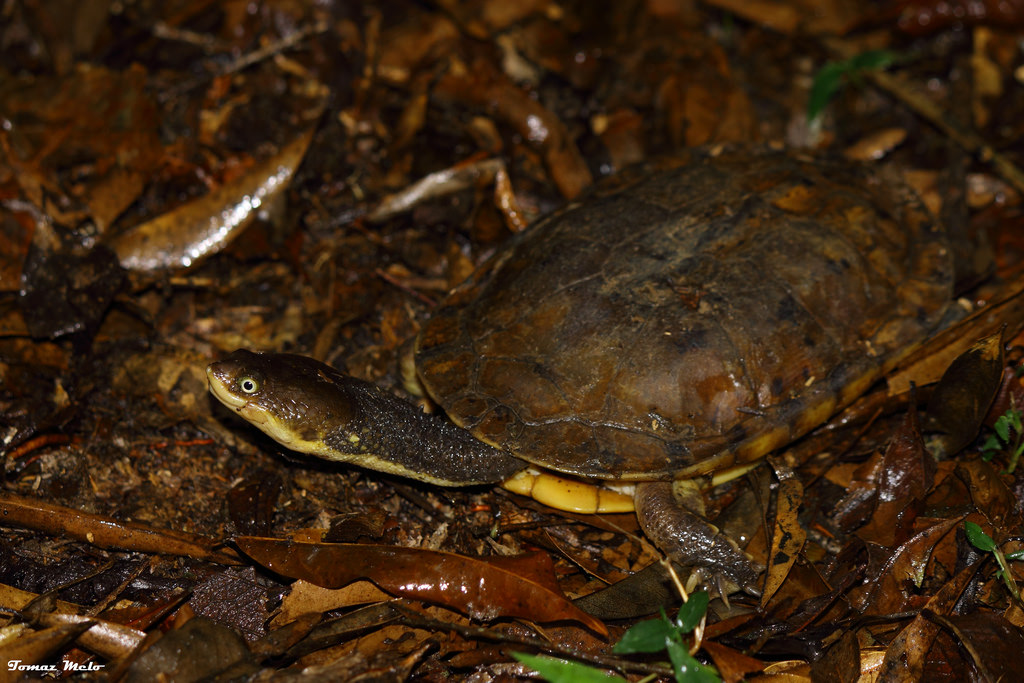
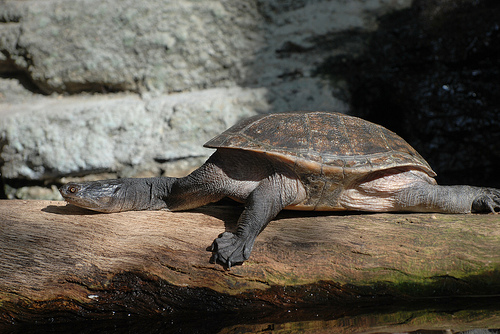
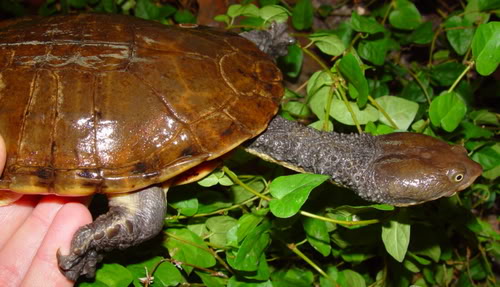
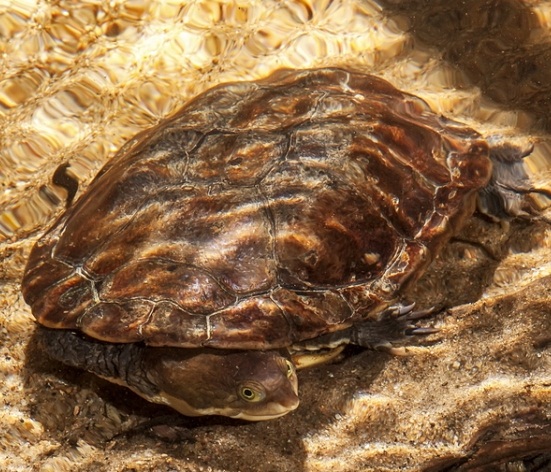
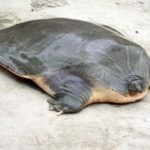
The Brazilian Snake-Necked Turtle gets its self-explanatory name because of its head that resembles the head of a snake. This rare carnivorous species is now considered vulnerable and is found in parts of Brazil.
| Kingdom |
Animalia |
| Phylum |
Chordata |
| Subphylum |
Vertebrata |
| Class |
Sauropsia |
| Order |
Testudines |
| Suborder |
Pleurodira |
| Family |
Chelidae |
| Subfamily |
Hydromedusinae |
| Genus |
Hydromedusa |
| Species |
H. maximiliani |
| Scientific Name |
Hydromedusa maximiliani |
| Other Names |
Cágado da serra (local name) |
| Length |
10–20 cm (3.9–7.9 in) |
| Coloration |
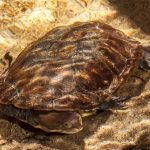
Walnut colored carapace with polygonal patters |
| Distribution |
Southeastern Brazil |
| Habitat |
Mostly in the sandy and rocky bottoms of streams and clear water in the forests |
| Diet |
Earthworms, termites, crickets, spiders, small frogs |
| Breeding Season |
September to January |
| Clutch Size |
1 to 3 eggs |
| Mode of Reproduction |
Oviparous (egg-laying) |
| IUCN Conservation Status |
Vulnerable |
Brazilian Snake Necked Turtle Pictures Gallery
-
-
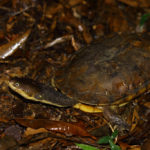
Hydromedusa Maximiliani
-
-
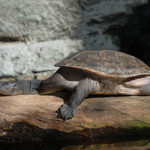
Brazilian Snake Necked Turtle
-
-
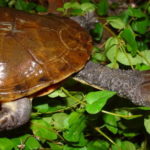
Brazilian Snake-necked Turtle
-
-
Cágado da Serra