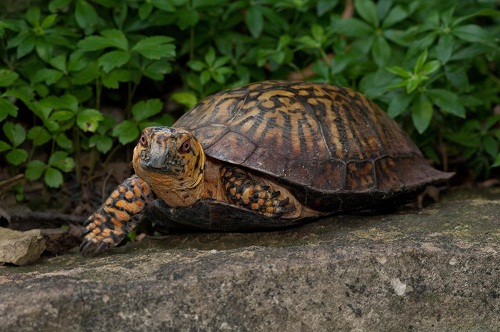
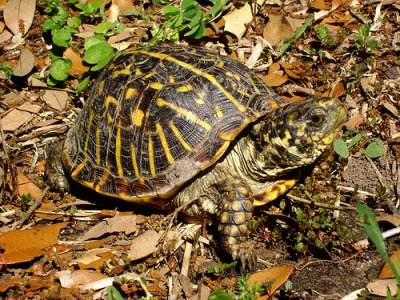
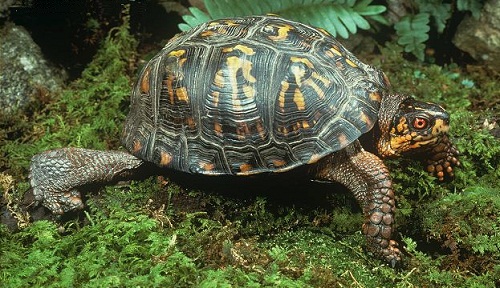
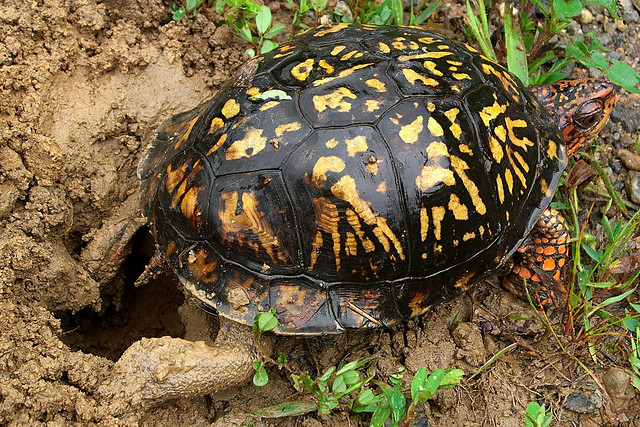
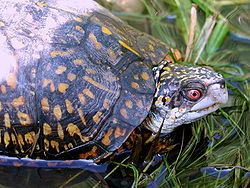
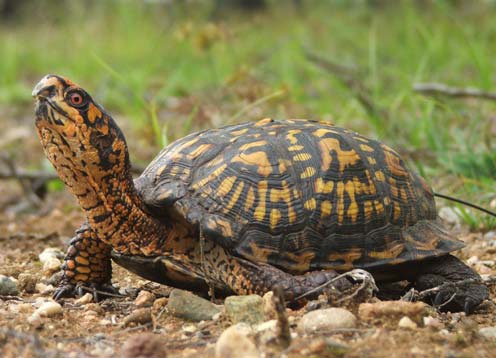
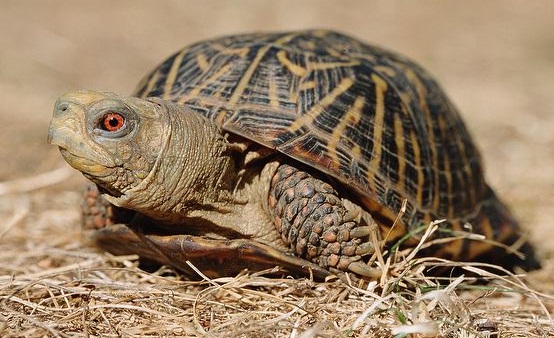
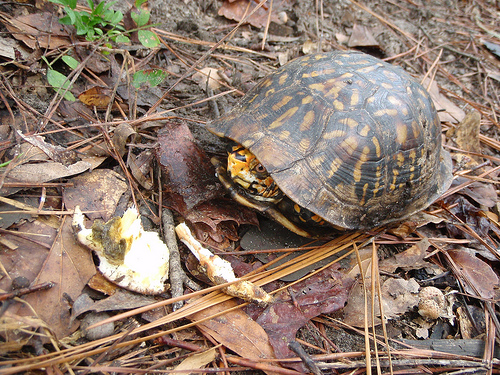
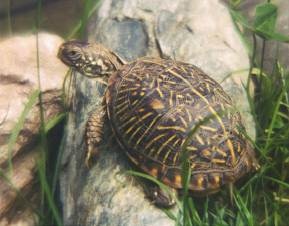
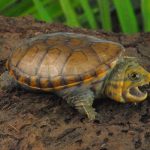
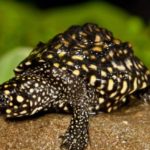
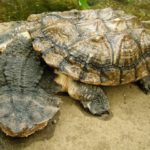
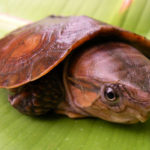
Common box turtles are found in the eastern United States and Mexico. There are four recognized subspecies of this species. They are terrestrial omnivores.
| Kingdom |
Animalia |
| Phylum |
Chordata |
| Class |
Reptilia |
| Order |
Testudines |
| Family |
Emydidae |
| Genus |
Terrapene |
| Scientific Name |
Terrapene carolina |
| Size |
4.5-6 in |
| Color |
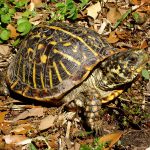
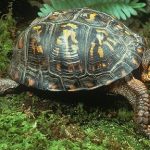
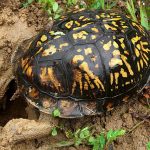
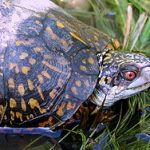
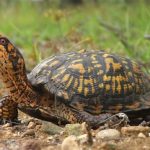
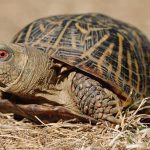
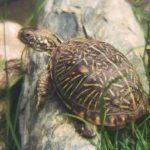
Brown outer shell often with variable patterns of yellow or orange lines, bars, spots or uneven patches; underside is dark brown – may be uniform or exhibit dark uneven patches |
| Distribution |
Maine, Michigan, eastern Texas and south Florida in the United States, southern Ontario in Canada, Mexico |
| Habitat |
Moist forested areas |
| Diet |
Beetles, earthworms, slugs, larva, grubs, berries, flowers, mushrooms, certain grasses, fruits |
| Hibernation Fact |
Members in the northern part of their range hibernate during winter |
| Predators |
Coyotes, raccoons, wild pigs, turkeys, skunks, fox, weasels, possums, birds, snakes, dogs, chickens, cats, other Box Turtles |
| Breeding Season |
Spring |
| Mode of Reproduction |
Oviparous (egg laying) |
| Clutch Size |
1 to 11 eggs |
| Incubation Period |
70 – 80 days |
| Average Lifespan |
Sometimes around 100 years |
| IUCN Conservation Status |
Vulnerable |
Common Box Turtle Pictures Gallery
-

-
Common Box Turtle Habitat
-
-
Common Box Turtle Images
-
-
Common Box Turtle Photos
-
-
Common Box Turtle
-
-
Terrapene Carolina
-
-
Common Box Turtle Pictures
-
-
Common Box Turtles
-

-
Common Box Turtle Diet
-
-
Common Box Turtle Care