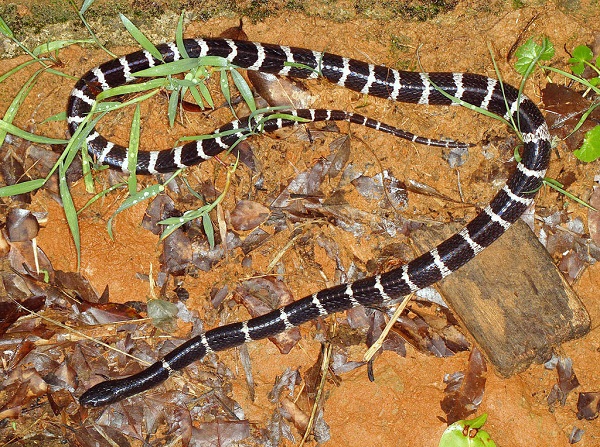
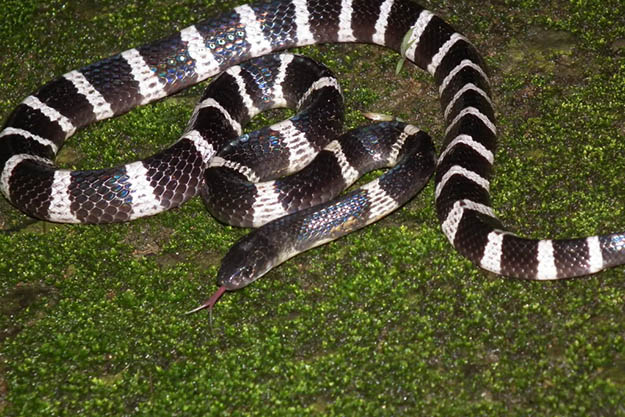
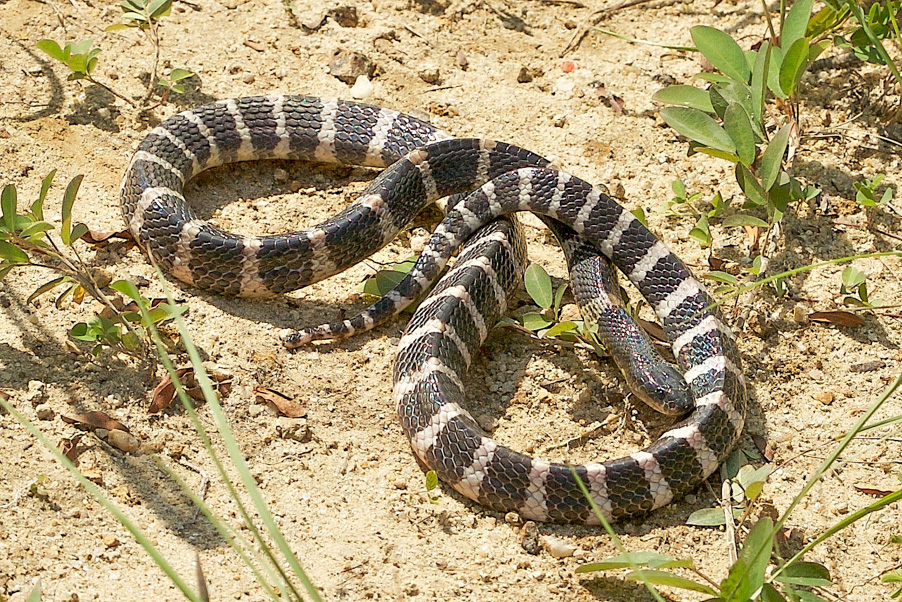
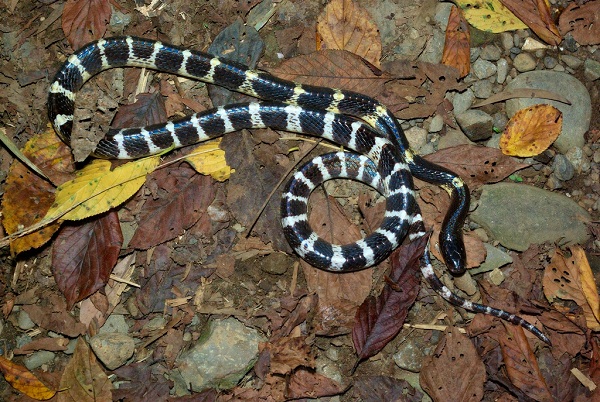
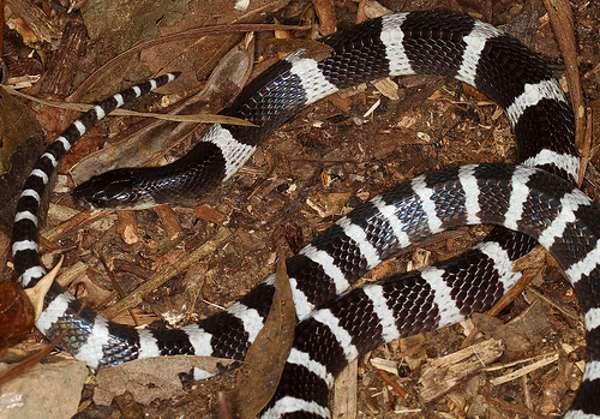
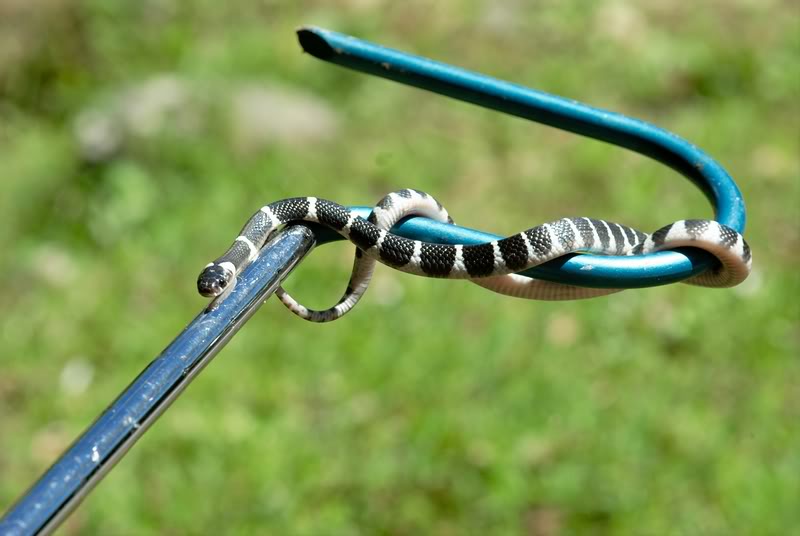
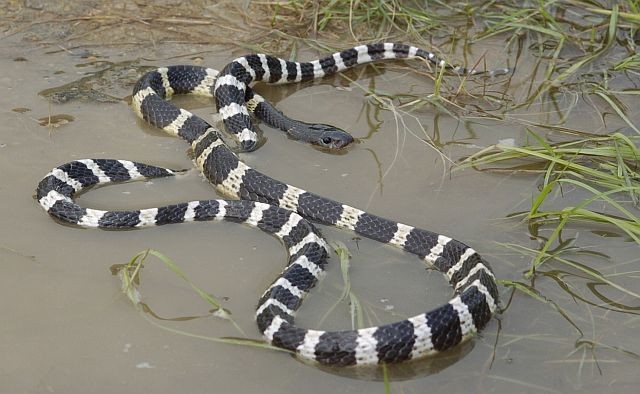
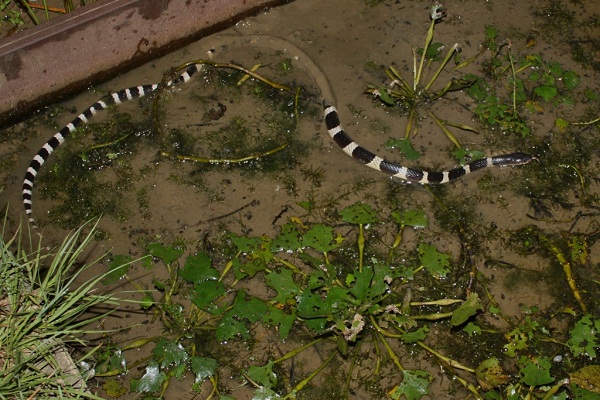
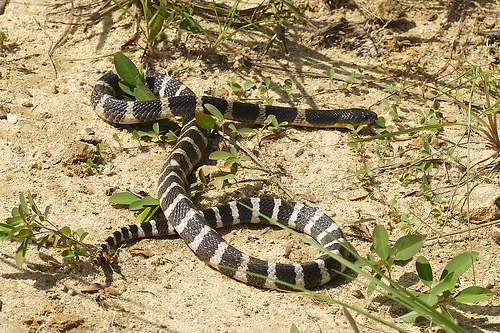
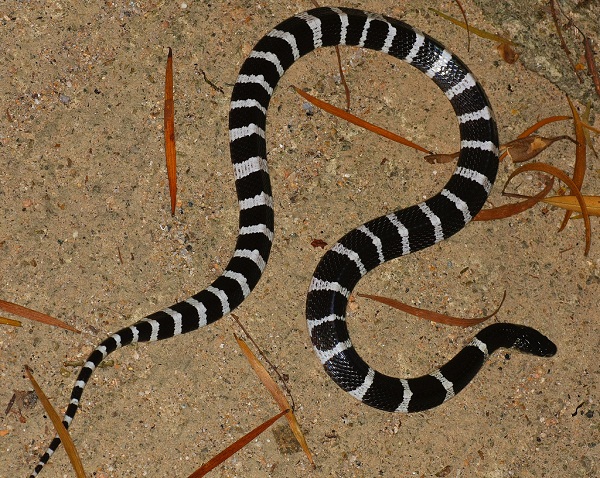
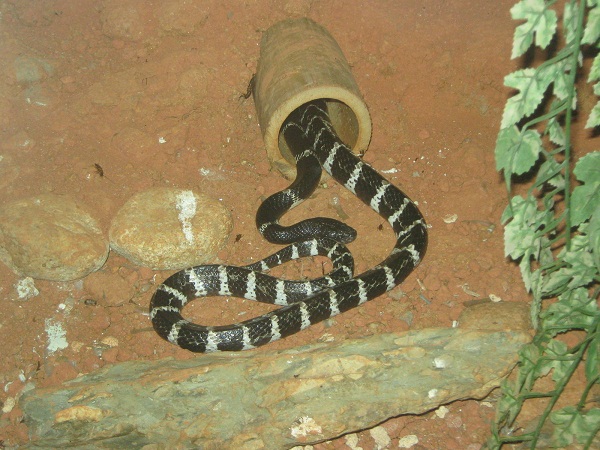
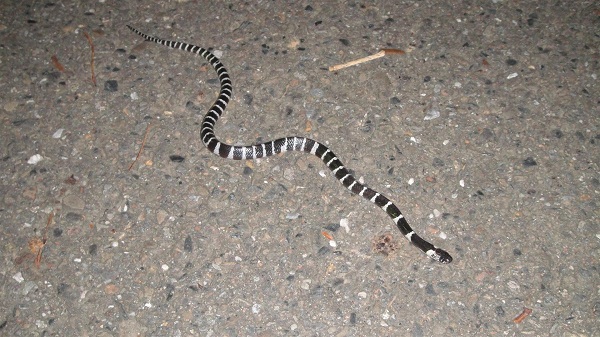
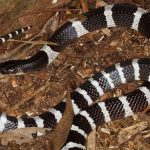
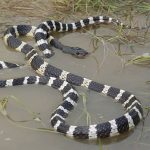
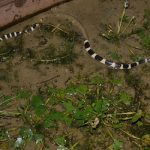
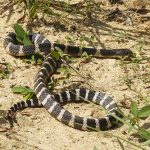
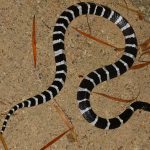
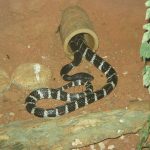
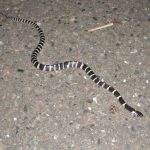
A highly poisonous species belonging to the elapid group, the Many-Banded Kraits are endemic throughout part of China and SE Asia. They have two subspecies.
| Kingdom |
Animalia |
| Phylum |
Chordata |
| Subphylum |
Vertebrata |
| Class |
Reptilia |
| Order |
Squamata |
| Suborder |
Serpentes |
| Family |
Elapidae |
| Genus |
Bungarus |
| Scientific Name |
Bungarus multicinctus |
| Other Names |
Taiwanese krait, Chinese krait |
| Length |
3.3 to 4.9 ft (average) |
| Color |
Black to dark bluish-black with white or cream cross bands |
| Distribution |
Central and southern China and Southeast Asia |
| Habitat |
Swamps and marshy area |
| Diet |
Mostly fish, but also other snake species, rodents, eels, frogs, and rarely lizards |
| Venom Fact |
Highly venomous |
| Mode of Reproduction |
Oviparous (egg laying) |
| Clutch Size |
3 to 15 eggs |
| IUCN Conservation Status |
Least Concern |
Many-Banded Krait Pictures Gallery
-
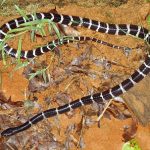
-
Bungarus Multicinctus
-
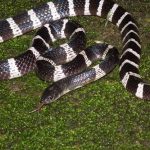
-
Chinese Krait
-
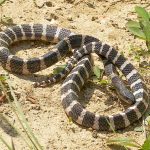
-
Images of Many-Banded Krait
-
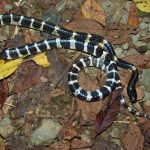
-
Many Banded Krait Snake
-
-
Many Banded Kraits
-

-
Many-Banded Krait Baby
-
-
Many-Banded Krait Images
-
-
Many-Banded Krait Photos
-
-
Many-Banded Krait Pictures
-
-
Many-Banded Krait
-
-
Pictures of Many-Banded Krait
-
-
Taiwanese Krait