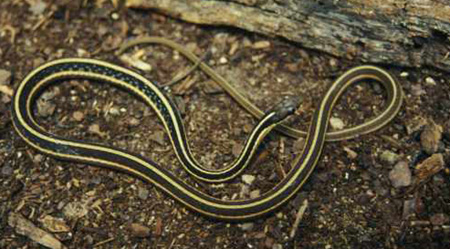
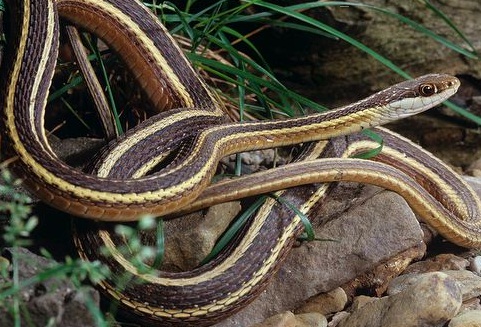
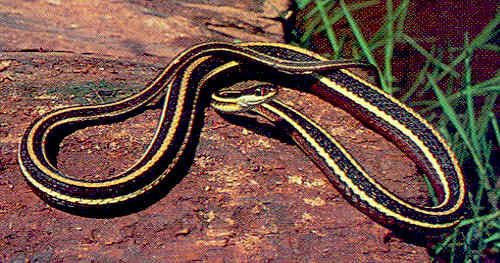
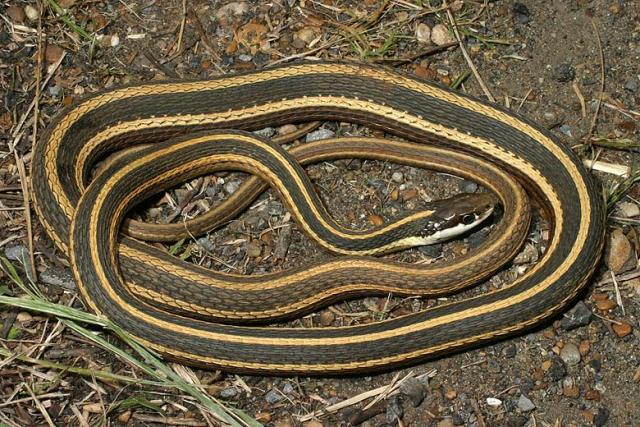
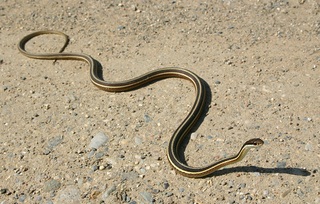
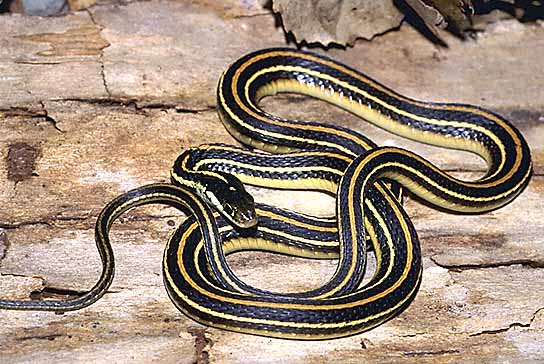
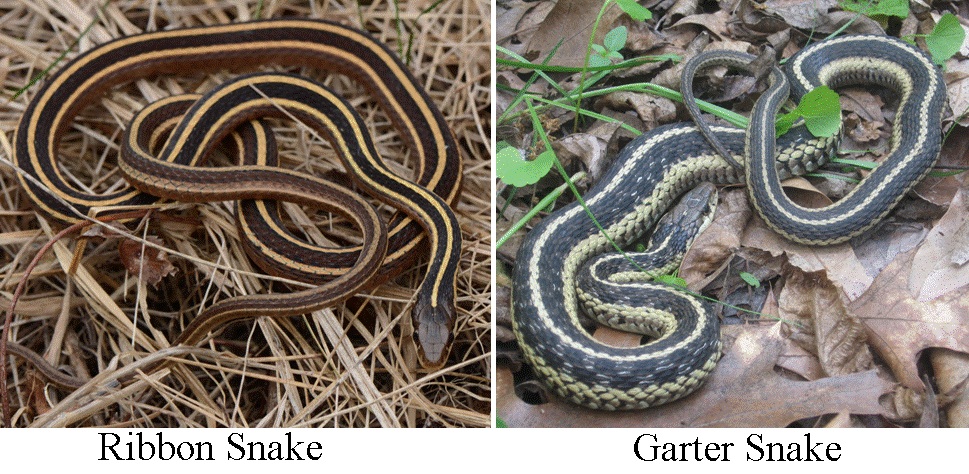
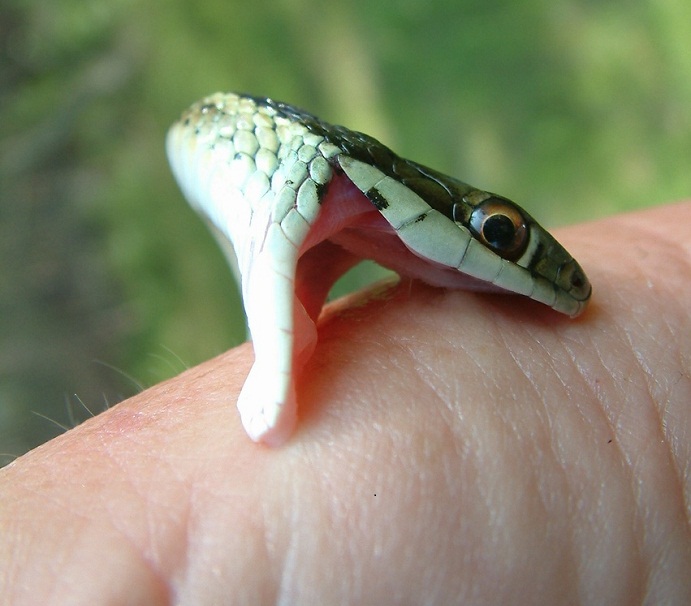
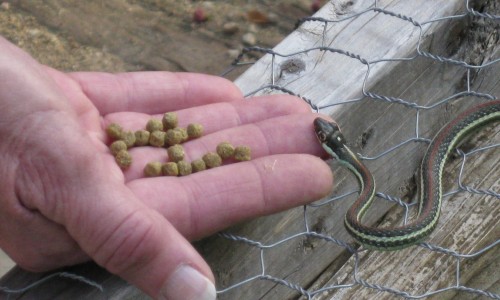
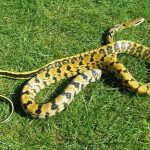
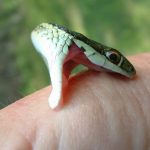
The Ribbon Snakegets its name from its striking ribbon-like looks. It is a member of the garter snake family, and is found in 4 different subspecies. Their gentle nature has made them a common pet.
| Kingdom |
Animalia |
| Phylum |
Chordata |
| Class |
Reptilia |
| Order |
Squamata |
| Suborder |
Serpentes |
| Family |
Colubridae |
| Subfamily |
Natricinae |
| Genus |
Thamnophis |
| Species |
T. sauritus |
| Scientific Name |
Thamnophissauritus |
| Other Names |
Ribbonsnake |
| Length |
16–35 in (41–89 cm), average |
| Coloration |
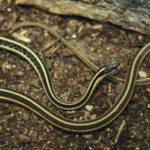
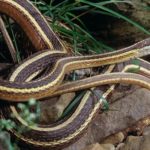
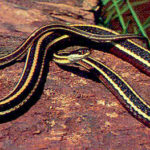
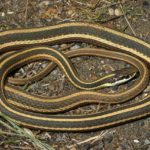
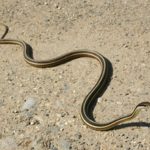
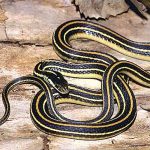
Three bright yellow lines running from the head to the tail tip with minute dotted patterns in dark gray and off white |
| Distribution |
Eastern parts of North America |
| Habitat |
Dry, open forests, with semi-long vegetation, woodlands, meadows, marshes, hillsides |
| Diet |
Slugs, worms, insects, minnows |
| Venom Fact |
Nonvenomous |
| Clutch Size |
4 and 27 live young |
| Mode of Reproduction |
Viviparous (gives birth to live young) |
| IUCN Conservation Status |
Least Concern |
Ribbon Snake Pictures Gallery
-
-
Ribbon Snakes Images
-
-
Ribbon Snakes Pictures
-
-
Ribbon Snakes
-
-
Ribbonsnake
-
-
Thamnophis Sauritus
-
-
Ribbon Snake
-
-
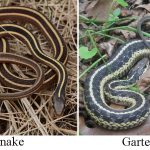
Ribbon Snake vs Garter Snake
-
-
Ribbon Snake Bite
-

-
Ribbon Snake Care